Showing posts with label literature. Show all posts

Tuesday, December 15, 2009

Holiday movies! A Christmas Carol

There are about four thousand movie versions of Dickens' A Christmas Carol, but this one from 1951 with Alastair Sim is my favorite. It's the Scroogiest. I've never been a huge fan of Dickens. The few books of his that I read in high school and college were difficult and depressing morality tales, but the man came up with some great names for his characters, didn't he? Ebenezer Scrooge? Fezziwig? Uriah Heep? Volumnia Dedlock? Great stuff. The next time you need a cool cat name, just get something from Dickens.


A Christmas Carol is a lovely story of despair and redemption, but the part that stays with me is the scary scary image of The Ghost of Christmas Future. No matter what version I've seen, that fellow terrifies me, in his long black robe, pointing silently at doom. Eeeeek. As a kid, he scared the bejeebers out of me, and reminded me to always keep Christmas in my heart. He's even kind of spooky in The Muppet Christmas Carol, my second favorite version of the story. Okay, it's not very literary, but it has Michael Caine and Kermit the Frog. How can that be wrong?


Many TV shows have also done their versions of A Christmas Carol. My favorite here is WKRP in Cincinnati, with Johnny Fever as the Ghost of Christmas Future in his Black Death t-shirt. He's a bit overshadowed, though, by Venus Flytrap as Christmas Present in a red velvet fur trimmed Earth Wind and Fire Santa suit.
It says something about the lasting power of Dickens' story that it has lasted and been remade in so many permutations. From a 1901 silent British version to the hectic looking 3D cartoon that Disney released this year, Scrooge keeps on humbugging. Who knows what it will look like in 2109?

Tuesday, November 24, 2009

Books! The Secret History


Because I am an ONG (Original Nerd Girl), there are certain books I read at certain times of the year. Fall into winter means it's time to pull out The Secret History, by Donna Tartt. Set in a Vermont Liberal Arts college, this novel explores the effects of a murder on a group of friends. I have probably read this book fifty times, and the ending still surprises me, even though I know it's coming. I hesitate to give away too many of the details. There are characters here that are some of the most realistic people you will ever encounter in a work of fiction, including the narrator, Richard Papen. Richard comes from California to Vermont to attend college, and falls in with a group of wealthy Classics students who are enigmatic, flawed, and so wonderful to spend time with. You will fall in love with them, just a little. The novel works as a murder mystery in reverse, revealing the killing and the killers at the start, and then building the story of the circumstances that lead up to the murder throughout the rest of the book.
Tartt's descriptive talents and plotting will wow you, especially considering this is her first novel. Unfortunately, although this book was published in 1992, Tartt has only written one additional novel, the tragic The Little Friend, also a great read, but more of a summer book. I keep hoping that she's been working away at something truly mind blowing all of these years. The Secret History is in my top twenty-five books of all time. Give it a go on a chilly evening, and see if it doesn't charm you.

Wednesday, November 4, 2009

Check out my McGuffeys!

I love my old books. I have some pretty cool ones, including a first edition two-set Sexus by Henry Miller, a Christmas edition of Self-Reliance, an early edition of Doctor Faustus by Thomas Mann, and a seriously old complete works of Shakespeare. And then there are my McGuffeys.
McGuffey readers were the universal elementary school textbooks from 1836 until the mid-1900s. The set I have was published in 1879. When I got them out today, it kind of hit me that these books I was holding were one hundred years old.

A lot of early schoolbooks didn't survive, or are in really bad shape now. If you think about it, these books were used daily by young children, carried, read, worked out of, and often passed down to the next youngest and the next youngest, clear through a family of twelve or so kids. Most books published today will be dust in fifty years, much less one hundred, due to the poor grade of paper used in modern publishing. Paperbacks will be lucky to last thirty years.

The artwork in the McGuffeys is so amazing and engaging. And, if you think people were less educated then, you are seriously wrong. They learned differently, but they certainly read at a much more advanced level much earlier. This is basically a second or third grade text book. McGuffey introduced the idea of learning phonetically, sounding out words, and using vocabulary in sentences for context. Before that, kids just memorized vocabulary lists by rote. . . No little stories. No pictures.
The faces on the mice in this illustration kill me, sweet little ratty faces.

William McGuffey taught at Miami University of Ohio, which is where he developed these readers. Over 120 million copies of his readers have been sold since their first publication in 1836. Wow. He basically changed the way our country learned to read, and how amazing is that?
Of all of my vintage stuff, these books seem to hold the most inspiration and history. How many kids learned to read using these very books that I have in my living room? Now that is a magical thought.

Tuesday, November 3, 2009

My favorite etsy artists! Lakeillustration

Oliver Lake is quite a talented fellow, with a great gift for capturing the quirks and personae of our popular cultural icons. You all know that I can't get enough Alfred Hitchcock, so imagine how delighted I am by this fabulous black and white portrait of the directing master. You recognize this face instantly, but this portrait captures both the darkness of his work and the humor of his personality. Also, there's something about this print that reminds me a bit of a fingerprint from a crime scene, and isn't that apropos?


Ah, the genius of the young Robert DeNiro in Scorsese's Taxi Driver. Truly one of the most brilliantly disturbing films I have ever seen in my life. Isn't the color of this print marvelous? The acidic daisy yellow with the stark black, the intensity of Travis Bickle's gaze. The entire message of the movie is captured in this one image.


And this portrait of Beat Daddy Allen Ginsberg. Howl changed the literary world, with its reinterpretation of Walt Whitman's style. Ginsberg was truly one of the kindest, most talented writers of his generation. He believed that his love and his writing could change the world for the better. Lake's print captures his effusive spirit and warmth. Compare it to the DeNiro portrait's starkness. There is a similarity of style, but the way Lake handles his subject is entirely different, as the two figures could not be more opposite.


Look at this lovely, haunting landscape, House Where Nobody Lives. It's ghostly and gorgeous, and reminds me of the American Depression era, for some reason. The vaporous trees, the abandoned car, the encroaching darkness of the periphery. Even the house seems to have a facial expression. So beautiful.


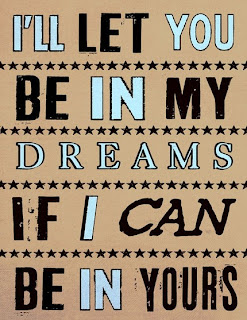
And we can't leave this post without a Bob Dylan reference. "I'll let you be in my dreams if I can be in yours" comes from Dylan's song Talkin' World War III Blues from the Freewheelin' Bob Dylan album from 1963. A fantastic quote turned into a print that reminds me of old time advertising posters. Wouldn't this be beautiful hung over your bed?


Honestly, I could list Lake Illustration's entire shop here. The prints run the gamut from Jack White to Virginia Woolf, Bettie Page to Johnny Cash. Vibrant colors, familiar faces, unusual landscapes, memorable quotations--Lake Illustration has it all.

Check out Oliver Lake's shop on etsy:
http://www.etsy.com/shop/lakeillustration

Thursday, October 8, 2009

National Poetry Day: Sylvia Plath's The Rabbit Catcher

It was a place of force—
The wind gagging my mouth with my own blown hair,
Tearing off my voice, and the sea
Blinding me with its lights, the lives of the dead
Unreeling in it, spreading like oil.

I tasted the malignity of the gorse,
Its black spikes,
The extreme unction of its yellow candle-flowers.
They had an efficiency, a great beauty,
And were extravagant, like torture.

There was only one place to get to.
Simmering, perfumed,
The paths narrowed into the hollow.
And the snares almost effaced themselves—
Zeros, shutting on nothing,

Set close, like birth pangs.
The absence of shrieks
Made a hole in the hot day, a vacancy.
The glassy light was a clear wall,
The thickets quiet.

I felt a still busyness, an intent.
I felt hands round a tea mug, dull, blunt,
Ringing the white china.
How they awaited him, those little deaths!
They waited like sweethearts. They excited him.

And we, too, had a relationship—
Tight wires between us,
Pegs too deep to uproot, and a mind like a ring
Sliding shut on some quick thing,
The constriction killing me also.

1962

Monday, September 14, 2009

8 Fragments for Kurt Cobain, by Jim Carroll

1/Genius is not a generous thing
In return it charges more interest than any amount of royalties can cover
And it resents fame
With bitter vengeance

Pills and powders only placate it awhile
Then it puts you in a place where the planet's poles reverse
Where the currents of electricity shift

Your Body becomes a magnet and pulls to it despair and rotten teeth,
Cheese whiz and guns
Whose triggers are shaped tenderly into a false lust
In timeless illusion


2/The guitar claws kept tightening, I guess on your heart stem.
The loops of feedback and distortion, threaded right thru
Lucifer's wisdom teeth, and never stopped their reverbrating
In your mind

And from the stage
All the faces out front seemed so hungry
With an unbearably wholesome misunderstanding

From where they sat, you seemed so far up there
High and live and diving

And instead you were swamp crawling
Down, deeper
Until you tasted the Earth's own blood
And chatted with the Buzzing-eyed insects that heroin breeds


3/You should have talked more with the monkey
He's always willing to negotiate
I'm still paying him off...
The greater the money and fame
The slower the Pendulum of fortune swings

Your will could have sped it up...
But you left that in a plane
Because it wouldn't pass customs and immigration


4/Here's synchronicity for you:

Your music's tape was inside my walkman
When my best friend from summer camp
Called with the news about you
I listened then...

It was all there!
Your music kept cutting deeper and deeper valleys of sound
Less and less light
Until you hit solid rock

The drill bit broke and the valley became
A thin crevice, impassible in time,
As time itself stopped.
And the walls became cages of brilliant notes
Pressing in...Pressure
That's how diamonds are made
And that's WHERE it sometimes all collapses
Down in on you


5/Then I translated your muttered lyrics
And the phrases were curious:
Like "incognito libido"
And "Chalk Skin Bending"

The words kept getting smaller and smaller
Until
Separated from their music
Each letter spilled out into a cartridge
Which fit only in the barrel of a gun


6/And you shoved the barrel in as far as possible
Because that's where the pain came from
That's where the demons were digging

The world outside was blank
Its every cause was just a continuation
Of another unsolved effect


7/But Kurt...
Didn't the thought that you would never write another song
Another feverish line or riff
Make you think twice?
That's what I don't understand
Because it's kept me alive, above any wounds


8/If only you hadn't swallowed yourself into a coma in Roma...
You could have gone to Florence
And looked into the eyes of Bellinni or Rafael's Portraits

Perhaps inside them
You could have found a threshold back to beauty's arms
Where it all began...

No matter that you felt betrayed by her

That is always the cost
As Frank said,Of a young artist's remorseless passion
Which starts out as a kiss
And follows like a curse

Monday, September 7, 2009

The Picture of Dorian Gray


"The only way to get rid of a temptation is to yield to it. Resist it, and your soul grows sick with longing for the things it has forbidden to itself, with desire for what its monstrous laws have made monstrous and unlawful."


Let me first recommend the Oscar Wilde book, published in 1891, Wilde's only novel. The story goes like this: The young and beautiful lad, Dorian Gray, has his portrait painted at the height of his youthful beauty by his friend, Basil. Basil's hedonistic buddy, Lord Henry, suggests to Dorian that he should live at full throttle, experiencing everything there is to experience. One only ever regrets the things one has not done. Dorian wishes that he could remain forever as physically beautiful as he is at that moment, and that his portrait would instead show the wears of time, age and experience. In fact, Dorian declares that he would give his soul to have this one wish granted. And, so, his wish is indeed fulfilled, and Dorian goes on to lead a life of wild debauchery without physically changing, while his portrait grows twisted and hideous. However, even after sacrificing his soul, Dorian still maintains at least a shred of a conscience. While he has become a piece of art himself, art for art's sake is simply not enough to base a life on.

Ah, I love the word "debauchery." Such a delicious word.

Anyway, the book is a great little read, because Wilde is such a witty and wonderful writer. If you're not up for the book, may I recommend the movie? It was released in 1945, and it has held up really well. The true joy of the movie is George Sanders as Lord Henry. I have such a crush on George Sanders. He's so English and urbane and this role was ideal for him. Also, keep an eye out for the devastatingly young Angela Lansbury as Sibyl Vane, and the impossibly lovely Donna Reed who wears this great little fur shrug thing. It's filmed beautifully, and it's full of fabulous little surprises.

Then, there is the portrait itself in the movie. It becomes a kind of additional character. We're never given the details of most of Dorian's transgressions, but, man, they must have been doozies judging by the state of the portrait by the close of the film. The portrait in the film was painted by magic realist artist Ivan Albright, and I can't imagine what audiences in 1945 made of it. It still causes gasps today. Here is one example of his unusual style of painting. You can see more of Albright's work at the Art Institute of Chicago.


So, Dorian Gray. . . part gothic horror, part failed romance, part period film. . . all good.
"There were moments when he looked on evil simply as a mode through which he could realise his conception of the beautiful."

Wednesday, July 22, 2009

Daisy Buchanan and the Jazz Age dream


I first read The Great Gatsby when I was ten. My mom had all of F. Scott Fitzgerald's books, and I thought that Gatsby was the greatest book ever. Now, however many years later, I have to say that I was pretty accurate for a ten-year-old. I have this yearly ritual which involves reading Gatsby every summer. I once took a summer seminar on Fitzgerald. I wrote three papers on Gatsby in college. Yet, when I read it, the book still holds magic for me.
Daisy Buchanan falls into a category in the academic literary world that is known as "an impossible she." You can chase and chase, base your entire life around her, live and fight and die for her, but she can never be possessed. The way Fitzgerald describes her is so hazy and vague. He never gives her a full physical description, so the reader never know what she really looks like. It's an integral part of her magic. She's like a gold dust mirage, a diamond ghost.
The line that always pops into my head when I think of Daisy Buchanan is this one: "Her voice was like money." Yes. That's really all you need to know right there. She is wealth, richness, not even human. Even though she ends up being the true villain in the book, Fitzgerald draws her in a way so that, like Gatsby, you can't help but utterly love her. She is what she is, a terrible driver, a woman who is reckless and careless with the emotions and lives of others, and the pot of gold at the end of the rainbow. She's a complicated contradiction, like so many of us women inherently are.
Fitzgerald based Daisy on a girl he lost after a youthful romance, but, when I read the book, I always think of his wife Zelda--artist, writer, and, like Fitzgerald himself, doomed. One of the original flappers, with the pearls dissolving in champagne, the drop-waisted dress, and the bob, she burned to death in a mental institution. Too tragic to think about for too long.
The necklace at the top of the post is titled Zelda. With its pearliness, its sparkle and its twenties sensibilities, I know Zelda in her Jazz Age heyday would have loved it. Daisy might have, but only if someone else bought it for her.
Link to Wikipedia's entry on The Great Gatsby: